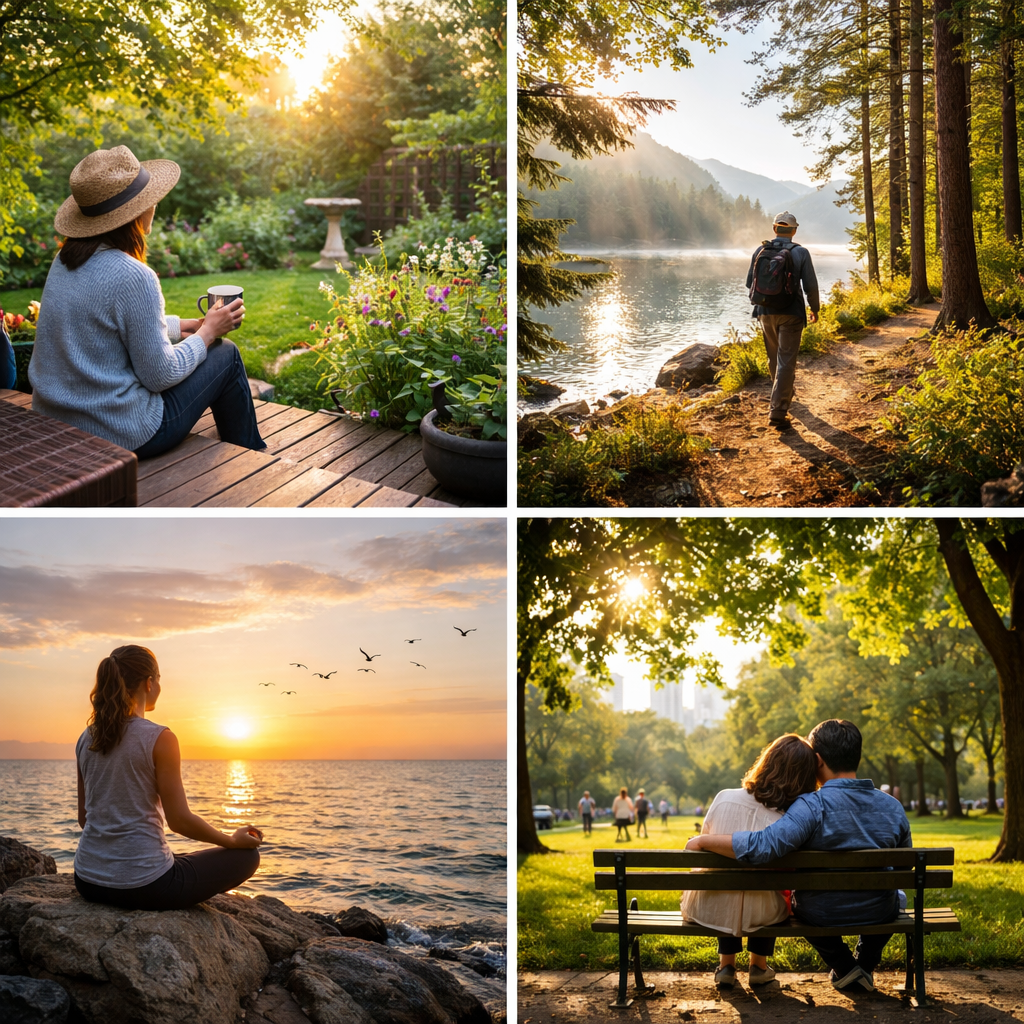


There was a time when I thought spending time in nature was something you did around the rest of your life. A weekend thing. A holiday bonus. Something you squeezed in once the important bits were taken care of.
I don’t see it that way anymore.
I’m 55 now. I’m fit. I’m educated. I take reasonable care of myself. And still—if I don’t get outside most days, I feel it. Not in a dramatic, headline-worthy way. Just a quiet flattening. A sense that I’m moving through the day slightly out of step with myself.
It took me a while to notice, to be honest. I was functioning well enough. But functioning and feeling truly well aren’t the same thing.
When “Fine” Wasn’t Quite Enough
Somewhere in my forties, I started to realise that being busy, capable, and healthy on paper didn’t automatically translate into feeling settled inside my own skin.
Nothing was wrong, exactly. But something was missing.
What surprised me was how ordinary the solution turned out to be.
It wasn’t a new habit tracker or a big lifestyle shift. It was simply stepping outside—more often, more intentionally, and without turning it into another task to do properly.
Ten minutes in the yard in the morning. A walk down a tree-lined street instead of straight back to the car. Sitting near water and letting my mind wander without trying to make sense of anything.
That was it.
My Nervous System Knew Before I Did
What I noticed first wasn’t emotional—it was physical.
My shoulders dropped. My jaw softened. My breath slowed without any effort on my part. The background hum of tension I hadn’t even realised I was carrying eased off a notch.
It turns out the body is paying attention long before the mind catches up.
Being outside—among trees, near water, or even just under an open sky—does something to my nervous system that nothing else quite manages. It doesn’t stimulate me or distract me. It settles me.
These days, that matters more than I used to think it would.
Ordinary Nature Is the Kind I Rely On
I am lucky to live next to a state park but I don’t hike mountains every week. And honestly, I don’t need to. Some days I go into town and walk the streets - for me it's more about variety of location!
Why Daily Nature Became Non-Negotiable at This Stage of My Life
Most of my days are grounded in very ordinary nature:
The same familiar trees I walk past each morning
Birds I recognise by sound, if not by name
The way the light shifts across the yard at different times of day
There’s something deeply reassuring about this kind of repetition. Nature doesn’t demand novelty. It offers continuity. And at this stage of my life, continuity feels like a quiet gift.
Less Fixing, More Listening
I used to approach wellbeing the way many of us do—trying to optimise, improve, fix. These days, I’m more interested in listening.
Spending time outdoors helps me notice what’s actually going on inside me before it turns into tension, fatigue, or irritability. It gives me a bit of space between stimulus and response. Enough room to choose how I want to move through the day.
Nature doesn’t give me answers. It gives me perspective. And that’s usually enough.
Why It’s Non-Negotiable Now
Daily time outside has become non-negotiable not because I’m rigid about it, but because I know myself better.
I know that if I skip it too often, I become less patient, less present, and more inclined to push through instead of paying attention. I don’t like that version of myself nearly as much.
So I protect that time—quietly, without fuss. Some days it’s five minutes. Other days it’s longer. What matters is the regularity, not the duration.
A Gentle Way Back to Ourselves
If there’s one thing I’ve learned, it’s this: you don’t need to overhaul your life to feel more at ease in it. You just need more consistent contact with the world that shaped you.
The ground. The air. The living systems that remind us we’re part of something bigger, slower, and far more forgiving than our schedules.
For me, daily time in nature isn’t about escaping my life. It’s about inhabiting it more fully.
And that, it turns out, is well worth making room for.