
🌱 Introduction
In today’s fast-paced, screen-heavy world, many people feel disconnected—from their bodies, their minds, and the environment around them. Yet one of the most powerful tools for restoring balance is also one of the simplest. How spending time in natural places everyday can improve your physical biomarkers, mental health, connection to your environment, and peace is no longer just a philosophical idea; it is a scientifically supported reality.
From sitting in your yard to walking a tree-lined street or visiting a national park, nature gently but consistently reshapes your biology and mental state. Let’s explore how these daily moments outdoors can transform your health and inner calm.
🌳 Understanding What Counts as “Natural Places” in Daily Life
Nature is not limited to remote wilderness. Even small green spaces can create measurable benefits.
Your Yard and Home Garden as Micro-Nature
A backyard, balcony garden, or even a few potted plants can lower stress and promote relaxation. Gardening engages movement, sunlight, and sensory awareness—all vital for well-being.
Forests, Trails, and Wooded Areas
Forests offer rich sensory experiences: rustling leaves, filtered light, and earthy scents. Practices like forest bathing (shinrin-yoku) are linked to reduced stress hormones
Water-Based Environments: Lakes, Rivers, Oceans
Blue spaces calm the nervous system. The rhythmic sound of water promotes relaxation and mental clarity.
City Parks, Tree-Lined Streets, and Urban Green Spaces
Urban nature reduces the psychological toll of city living. Even brief exposure improves mood and focus.
State and National Parks as Deep Nature Immersion
These environments amplify nature’s benefits, offering restoration on a deeper physical and emotional level.
🧬 The Science Behind Nature and Human Biology
How the Nervous System Responds to Natural Environments
Nature activates the parasympathetic nervous system—the “rest and digest” mode—lowering stress and improving recovery.
The Role of Sunlight, Fresh Air, and Movement
Sunlight boosts vitamin D, fresh air improves oxygenation, and gentle movement enhances circulation and metabolism.
❤️ Physical Biomarkers Improved by Daily Nature Exposure
Reduced Cortisol and Stress Hormones
Spending time outdoors consistently lowers cortisol, the primary stress hormone linked to inflammation and chronic disease.
Improved Heart Rate Variability and Blood Pressure
Nature exposure improves heart rate variability, a key indicator of resilience and cardiovascular health.
Better Immune Function and Inflammation Markers
Natural environments increase natural killer cell activity, strengthening immune defense.
Enhanced Sleep Quality and Circadian Rhythm
Daylight exposure helps regulate melatonin, improving sleep quality and duration.
🧠 How Nature Supports Mental Health and Emotional Balance
Reduced Anxiety and Depression Symptoms
Regular time in nature reduces rumination and negative thought loops.
Improved Focus, Memory, and Cognitive Performance
Green spaces restore attention and mental clarity, especially after screen use.
Emotional Regulation and Mood Stability
Nature helps stabilize emotions by calming overactive stress responses.
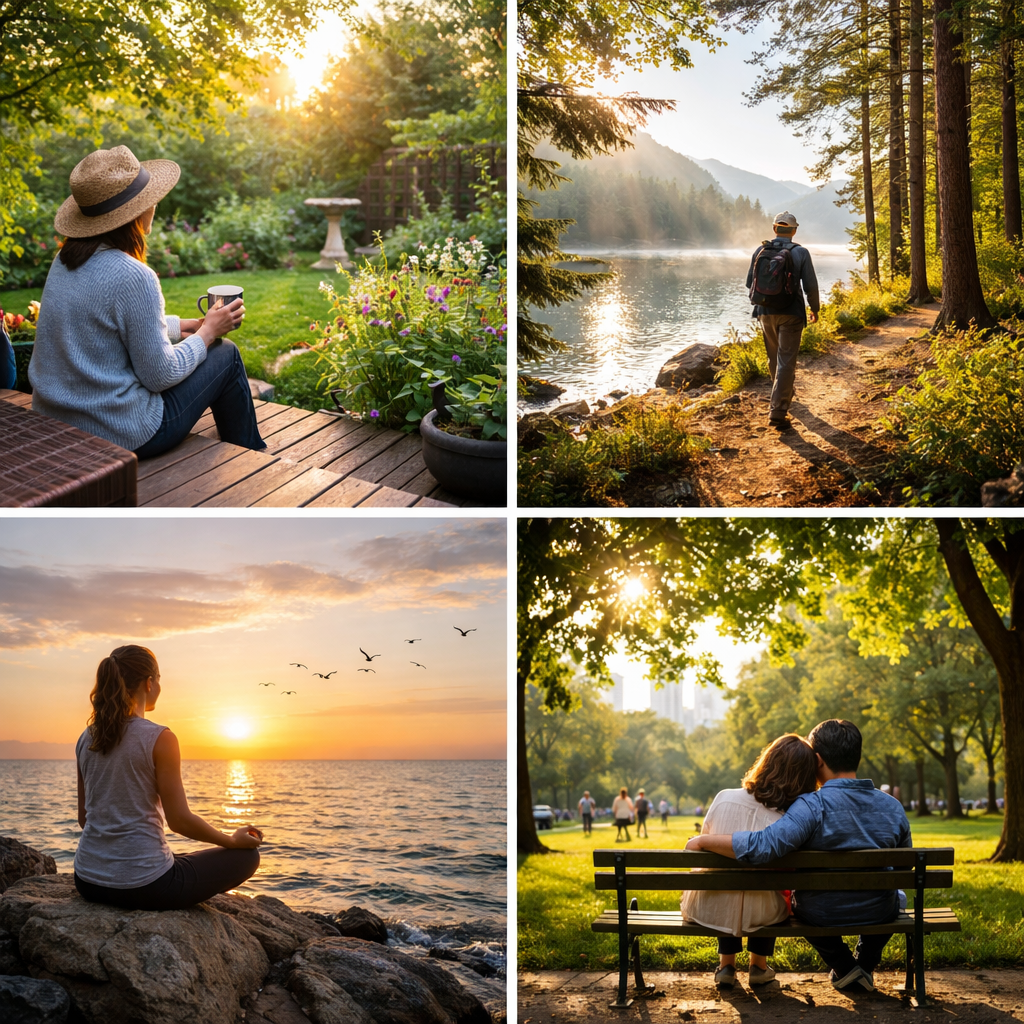
☮️ Nature’s Role in Building Inner Peace
Slowing Down the Mind and Reducing Mental Noise
Natural environments naturally encourage presence and reflection.
Mindfulness Without Formal Meditation
Simply observing trees or water fosters mindfulness effortlessly.
🌍 Strengthening Your Connection to the Environment
Developing Environmental Awareness and Stewardship
Spending time outdoors builds care and responsibility for the natural world.
Feeling Part of Something Larger Than YourselF
Nature dissolves ego-driven stress and fosters humility and gratitude.
🤝 Nature and Social Connection
Shared Outdoor Experiences and Relationships
Outdoor activities strengthen bonds and encourage meaningful conversations.
⏱️ Daily Nature vs. Occasional Escapes
Why Consistency Matters More Than Duration
Short daily exposure is more beneficial than infrequent long trips.
⏳ How Much Time in Nature Is Enough?
Research-Based Time Recommendations
Studies suggest 20–120 minutes per week yields significant health benefits ([National Institutes of Health]).
🌼 Simple Ways to Add Nature to Your Everyday Routine
Morning, Midday, and Evening Nature HabitS
Morning walk on a tree-lined street
Lunch in a park
Evening time in your yard or near water
🚧 Overcoming Barriers to Spending Time Outdoors
Weather, time, and accessibility can be managed with intention and flexibility.
👶 Nature Exposure Across Different Life Stages
Children, adults, and older adults all benefit uniquely from daily nature exposure.
❓ FAQs About Daily Nature Exposure
1. Can urban nature really improve health?
Yes, even small green spaces provide measurable benefits.
2. Do I need exercise to benefit from nature?
No. Sitting or standing quietly outdoors still helps.
3. Is nature helpful for burnout?
Absolutely. Nature restores mental energy and emotional balance.
4. What if I don’t like the outdoors?
Start small—comfort grows with familiarity.
5. Does weather matter?
Different seasons offer different benefits.
6. Can nature replace therapy or medication?
Nature complements, but does not replace, professional care.
🌿 Conclusion: Relearning How to Be Human Through Nature
In a world designed for speed and stimulation, nature reminds us how to slow down. How spending time in natural places everyday can improve your physical biomarkers, mental health, connection to your environment, and peace is not about escaping modern life—it’s about restoring balance within it.
Whether it’s a quiet moment in your yard, a walk through a park, or time near water, nature gently brings us back to ourselves. The invitation is simple: step outside, breathe deeply, and let the natural world do what it has always done—heal, ground, and connect.